Why Create This Guide?
Marketing teams often struggle to meet deadlines and achieve their goals because of inefficient processes and a lack of proper tools to support better ways of working.
Implementing agile principles and workflows, however, can go a long way toward solving these problems for marketing departments across all kinds of verticals. It’s no exaggeration nor hollow marketing claim to state that it has been immensely impactful upon CoSchedule’s growth.
What Can You Expect to Find Here?
There are numerous ways to apply agile to marketing. Like so many other things in this industry, there are also different philosophies and opinions on the best way it should be approached.
With that said, this guide is not necessarily the end-all, be-all authority on the subject. It’s such a broad topic with so many varying approaches that one resource covering every aspect of agile inside and out would be an intimidating challenge (both to create and to read).
Instead, it breaks down the basics of what you need to know, and explains how to actually implement it with easy-to-follow step-by-step instruction. It’s all informed by what has worked for the marketing team at CoSchedule too, blending our own approach with some by-the-book explanation. There’s some (strategic and thoughtful) repetition of information too, so if you don’t quite catch something the first time, you’ll often have an opportunity to hear it again later.
Rather than diving deep into minutiae that may not make sense to newcomers, we thought this approach would be more useful. What matters most above all is that you’re able to put better processes into place so your team can work more efficiently and effectively to get better results in less time. And that’s exactly what we hope you’ll gain as a result of reading this guide.
Download: Get This Guide in One Full PDF
If you would prefer to read this guide in PDF, you can. Download the complete guide in one easy-to-read format below (plus, find additional templates you’ll use in subsequent chapters):
So, What Exactly is Agile Marketing?
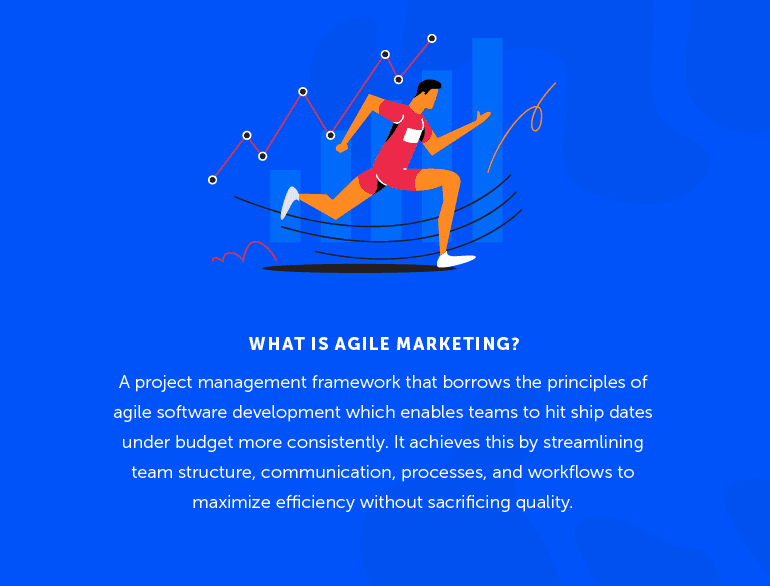
It’s a project management framework that borrows the principles of agile software development (which enables teams to hit ship dates under budget more consistently) and applies it to a marketing context. It achieves this by streamlining team structure, communication, processes, and workflows to maximize efficiency without sacrificing quality.
This results in doing better work more quickly with fewer missed deadlines. It also allows teams to respond to changes in the market and adjust tactics according to what works much more rapidly than the typical annual “big campaign” advertising model.